
Radiofrequency ablation (RFA) is a minimally invasive pain management procedure that uses controlled heat generated by radiofrequency energy to interrupt pain signals transmitted by specific nerves.
It is commonly recommended for patients experiencing chronic neck pain, lower back pain, arthritis-related discomfort, and facet joint pain that has not responded to conservative treatments. At RevitaLife, radiofrequency ablation is performed as part of a personalized treatment plan designed to provide long-lasting pain relief while improving mobility and overall quality of life.
By targeting the nerves responsible for pain without affecting surrounding tissues, RFA offers an effective non-surgical option for many patients seeking to return to their daily activities with greater comfort.
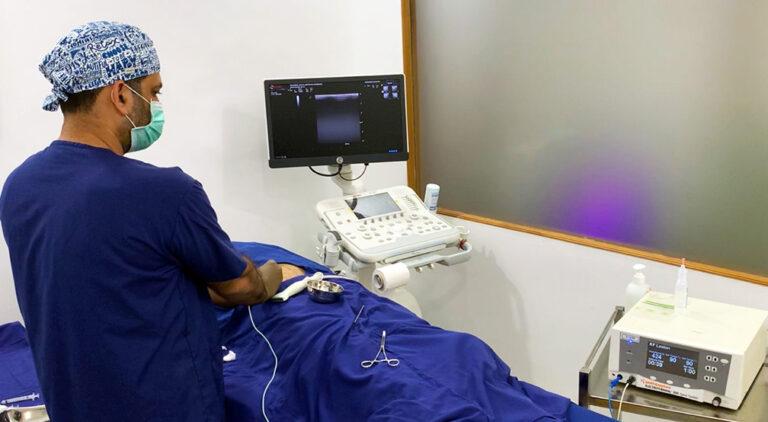
Radiofrequency ablation works by using a specialized needle to deliver controlled heat to targeted nerves responsible for transmitting pain signals.Before the procedure, the affected nerves are carefully identified using advanced imaging guidance to ensure precise treatment. The heat temporarily disrupts the nerve’s ability to send pain signals to the brain without affecting nearby muscles or surrounding tissues.
Because the treated nerve can gradually regenerate over time, pain relief may last for several months or longer, depending on the individual’s condition. At RevitaLife, RFA is performed using image-guided techniques to maximize safety, accuracy, and long-term effectiveness.
Radiofrequency ablation is commonly recommended for patients experiencing chronic pain that has not responded to conservative treatments. At RevitaLife, this procedure is used to manage several spine and joint conditions while helping patients improve function and quality of life.
RFA may provide lasting relief for chronic neck pain caused by irritated facet joints or degenerative changes in the cervical spine.
Patients with persistent lower back pain related to facet joint arthritis or spinal degeneration may benefit from radiofrequency ablation after a comprehensive evaluation.
Facet joints help stabilize the spine but can become painful due to arthritis or injury. Radiofrequency ablation targets the nerves supplying these joints to reduce chronic pain.
Inflammation or dysfunction of the sacroiliac joint can cause lower back and pelvic pain. RFA may help reduce pain by interrupting the affected nerve signals.
Radiofrequency ablation is performed on an outpatient basis and typically takes less than an hour. Before treatment, your provider reviews your medical history and confirms the source of pain through diagnostic testing. During the procedure, image-guided technology is used to accurately position the treatment needle near the targeted nerve. Controlled radiofrequency energy is then applied for a short period to interrupt pain transmission. Most patients return home the same day and resume normal activities within a short time, following their provider’s recommendations.
Your provider will review your symptoms, medications, imaging studies, and previous treatments to determine whether RFA is the appropriate option.
Local anesthesia is used to improve comfort while image guidance ensures precise needle placement and accurate treatment.
Mild soreness may occur for a few days after treatment. Many patients begin noticing gradual improvement within one to three weeks as inflammation decreases and pain signals are interrupted.
Radiofrequency ablation offers an effective non-surgical option for patients seeking long-term relief from chronic pain. Benefits may include:
You may be a good candidate if you have:
Radiofrequency ablation may be appropriate for patients with chronic neck pain, lower back pain, or joint pain that has not improved with medication, physical therapy, or other conservative treatments. Candidates often undergo diagnostic nerve blocks before RFA to confirm the source of pain. During your consultation at RevitaLife, our experienced providers will evaluate your symptoms, medical history, and imaging results to determine whether this treatment is right for you.
At RevitaLife, we combine advanced technology with personalized care to deliver safe and effective pain management solutions. Every treatment plan is tailored to the patient’s unique condition and long-term goals.
Our team has extensive experience treating chronic spine and joint pain using evidence-based, minimally invasive procedures.
We utilize advanced imaging technology to accurately target the affected nerves, improving both safety and treatment effectiveness.
Every patient receives an individualized treatment plan that may include RFA, regenerative medicine, PRP therapy, rehabilitation, and other conservative treatments.
We continue monitoring your recovery after treatment and adjust your care plan whenever necessary to help you achieve lasting pain relief.
Many patients experience pain relief for 6 to 12 months or longer, although results vary depending on the individual and the underlying condition.
Most patients tolerate the procedure well. Local anesthesia is used to minimize discomfort, and any temporary soreness usually resolves within a few days.
Some patients notice improvement within a few days, while others experience gradual pain relief over two to three weeks.
Yes. If pain returns after the treated nerves regenerate, radiofrequency ablation can often be repeated if your provider determines it is appropriate.
No. Radiofrequency ablation is a minimally invasive outpatient procedure that does not require major surgery or a lengthy recovery period.
If you are experiencing persistent shoulder or knee concerns and would like to explore whether regenerative therapies may be appropriate, we invite you to schedule a consultation.